
Soft Skills in Leadership: A Practical Guide for Healthcare Managers and Executives

A healthcare demonstrating soft skills in leadership using active listening and empathy during a team huddle.
Key Takeaways
Soft skills in leadership are essential for healthcare professionals. They directly affect patient safety, staff retention and the overall success of hospitals and clinics.
Important soft skills for healthcare leaders include good communication, emotional intelligence, empathy, conflict resolution, adaptability and strategic thinking.
Soft skills can be improved with regular practice, coaching, mentoring and feedback — they are skills anyone can develop.
Building soft skills in teams means including them in hiring, performance reviews, promotions and daily work routines.
The impact of soft skills can be measured through staff engagement, turnover rates, patient feedback and leadership assessments.
In March 2020, when COVID-19 first hit hospitals, it became clear that clinical knowledge alone wasn’t enough. What equally mattered was the ability to communicate clearly during uncertainty, listen to exhausted nurses and stay calm when families couldn’t be with their loved ones.
Some leaders withdrew, leaving teams feeling unsupported. Others led with empathy, clear communication and presence, helping their teams stay strong in the face of countless unknowns. These “soft skills” were not extras — they made the difference between success and failure.
This article explains which soft skills matter most for healthcare leaders, how to practice them and how to build them into teams and organizations. It also answers common questions like how to teach soft skills to busy staff and how to handle leaders who lack them.
What Are Soft Skills in Healthcare Leadership?
Soft skills in healthcare leadership are the interpersonal and emotional abilities that shape how leaders communicate, manage conflict and guide teams under pressure. These skills include communication, empathy, emotional intelligence, adaptability and systems awareness.
Unlike technical clinical skills, soft skills determine how effectively leaders influence culture, collaboration and patient experience. Many clinicians advance into leadership based on expertise, but their long-term success depends on how well they relate to people and manage complex human dynamics.
Examples of Soft Skills in Action:
Calming a worried family when a patient’s condition worsens
Leading transparent conversations after a medical error
Resolving conflict between clinical departments
Coordinating discharge planning across multiple teams
Soft skills may be less tangible than clinical competencies, but they are observable, teachable and measurable through staff feedback, engagement data and patient experience outcomes.
Hard Skills vs. Soft Skills: Understanding the Balance in Healthcare Leadership
Hard skills provide the technical foundation for healthcare leadership, while soft skills enable leaders to apply that knowledge effectively. Clinical expertise ensures safe care delivery, but communication, empathy and conflict resolution determine whether teams function well and patients feel supported.
Leaders who balance both skill sets foster collaboration, reduce burnout and improve care quality. Investing in soft skill development alongside technical training creates stronger leaders and healthier organizations.
Why Soft Skills Matter for Healthcare Leaders
Research shows that leaders with strong soft skills directly influence patient safety, staff retention and organizational performance. Leaders who communicate clearly and foster psychological safety create environments where employees feel comfortable raising concerns before problems escalate.
Empathy and emotional intelligence help prevent burnout in high-stress clinical settings. When staff feel respected and heard, they are more likely to remain committed to their roles, reducing turnover and protecting continuity of care.
Soft skills also support cross-functional teamwork. Care delivery depends on collaboration among clinicians, administrators and support staff. Leaders who build strong relationships align teams around shared goals, improving efficiency and patient experience.
Core Soft Skills Every Healthcare Leader Needs
While many soft skills matter, some are especially important in healthcare. Core competencies, as identified by organizations like NACE, are essential skills for all leaders, and especially those in healthcare.
Communication: From Bedside to Boardroom
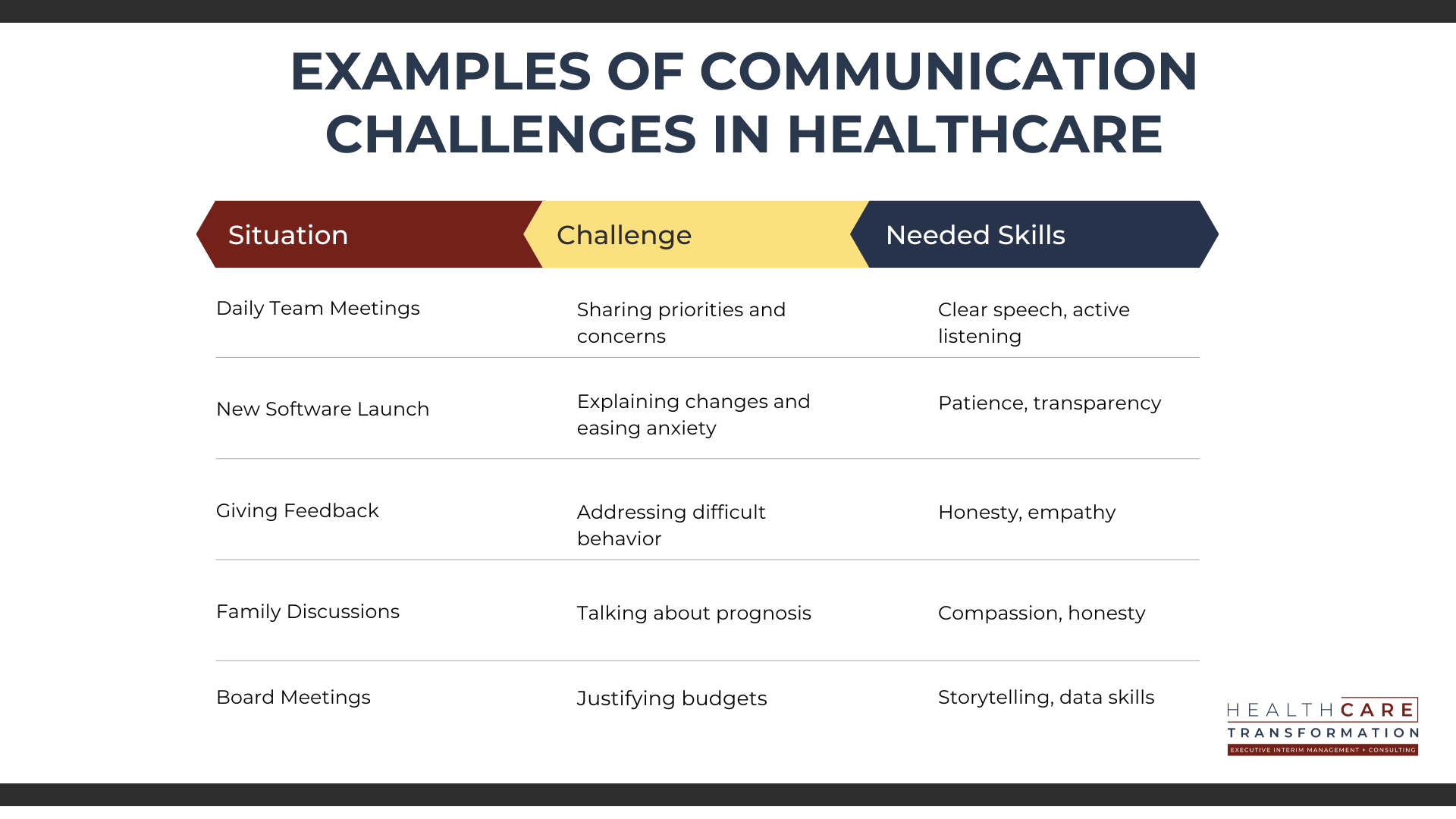
Healthcare leaders communicate with patients, teams, executives, stakeholders, regulators and the community. Communication skills are essential for navigating different audiences, building relationships and fostering teamwork.
Active listening is an equally important part of strong communication. Leaders who listen to understand build trust and catch problems early. This means clarifying and confirming what others say — not just waiting to respond.
Emotional Intelligence, Interpersonal Skills and Empathy
Emotional intelligence allows leaders to manage their own emotions while responding effectively to the emotions of others. In high-pressure environments, this skill helps leaders remain steady, communicate with compassion and guide teams through difficult situations.
Examples of Emotional Intelligence in Action:
Supporting staff after an unexpected patient death
De-escalating conflict with distressed or angry family members
Recognizing early signs of burnout or emotional fatigue among team members
Emotionally intelligent leaders build trust and psychological safety through presence, transparency and genuine concern for staff well-being. By modeling healthy stress management, they reinforce resilience as a professional priority.
Conflict Resolution and Negotiation
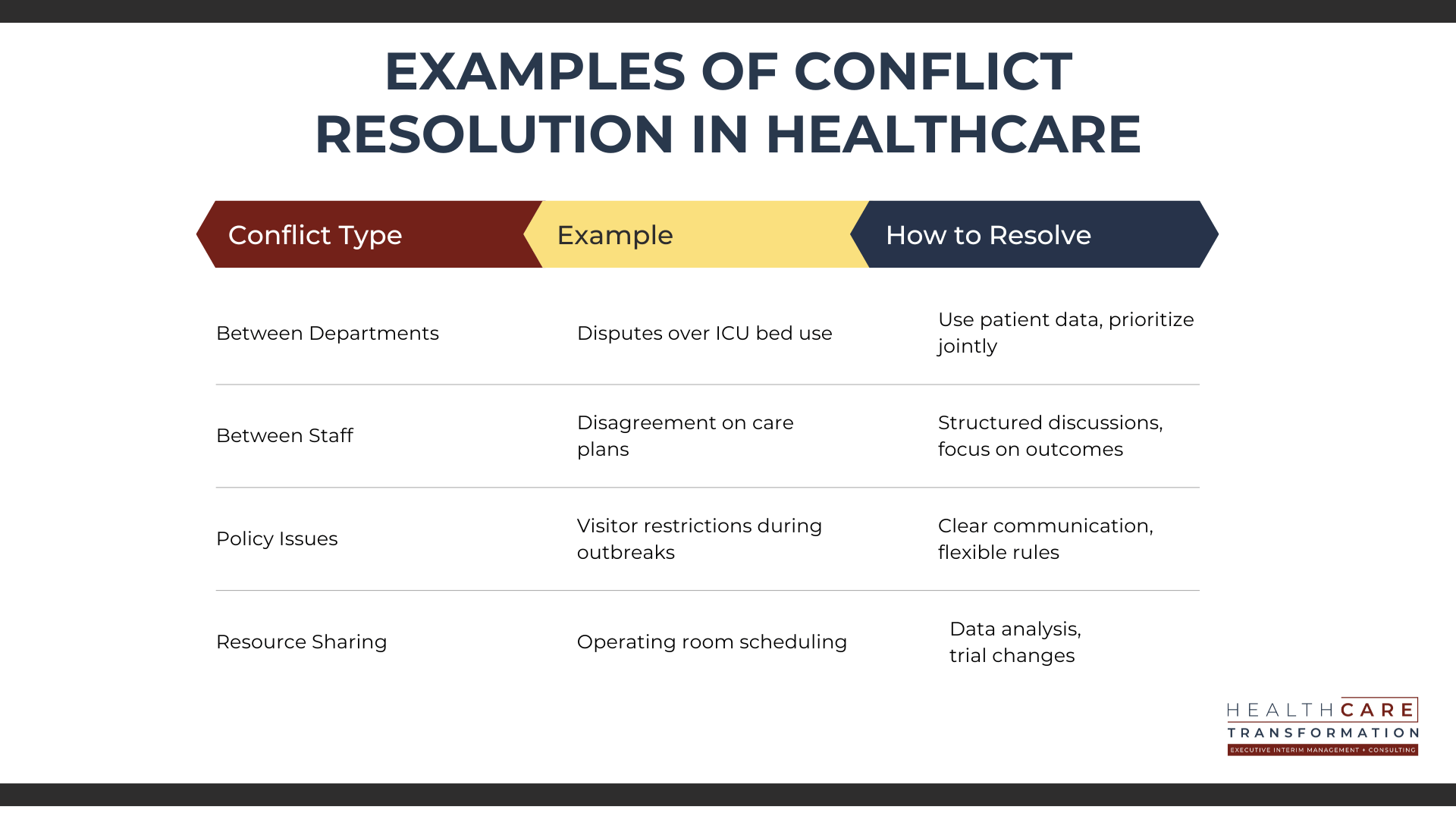
Conflicts happen in healthcare between departments and external partners. As a leader, knowing how to manage these tense situations and guide responsible outcomes is a requirement.
To resolve conflicts, leaders must be able to collaborate effectively with others. These interpersonal skills help build rapport, establish trust and ensure that all voices are heard. Leaders who can work in diverse and dynamic environments are better equipped to address challenges that arise in multicultural and rapidly changing workplace situations.
Effective leaders use neutral language and focus on shared goals, not positions. This helps find creative solutions.
Adaptability and Decision-Making Under Uncertainty
Healthcare leaders are frequently required to make high-stakes decisions with incomplete or rapidly changing information — whether during public health crises, staffing shortages or regulatory shifts. What separates effective leaders from reactive ones is their ability to adapt while maintaining clarity and confidence.
Examples of Adaptability in Action:
Rapidly establishing COVID-19 care units
Adjusting surgical schedules during patient surges
Implementing telehealth services to preserve continuity of care
Enforcing evolving safety protocols despite resistance
Adaptability requires guiding teams through change with purpose. Skilled leaders explain the rationale behind decisions, acknowledge risks and outline contingency plans. Transparency builds trust even when outcomes are uncertain.
Self-awareness also plays a role. Leaders who understand their own decision-making tendencies can adjust their approach to meet the needs of both the situation and their teams.
Strategic Thinking and Systems Awareness
Strategic thinking means anticipating long-term trends such as aging populations, workforce shortages and technological change. Rather than reacting to problems, strategic leaders plan for future needs.
Examples of Strategic Thinking in Action:
Moving from volume-based to value-based care models
Investing in community health workers to reduce preventable readmissions
Partnering with academic institutions to strengthen nursing pipelines
Securing funding to modernize facilities and clinical infrastructure
Systems awareness allows leaders to understand how departments and services interact. Emergency care, inpatient units, home health and family support all influence patient outcomes. Leaders who recognize these connections collaborate across teams to address root causes rather than isolated symptoms.
Developing Soft Skills as a Healthcare Leader
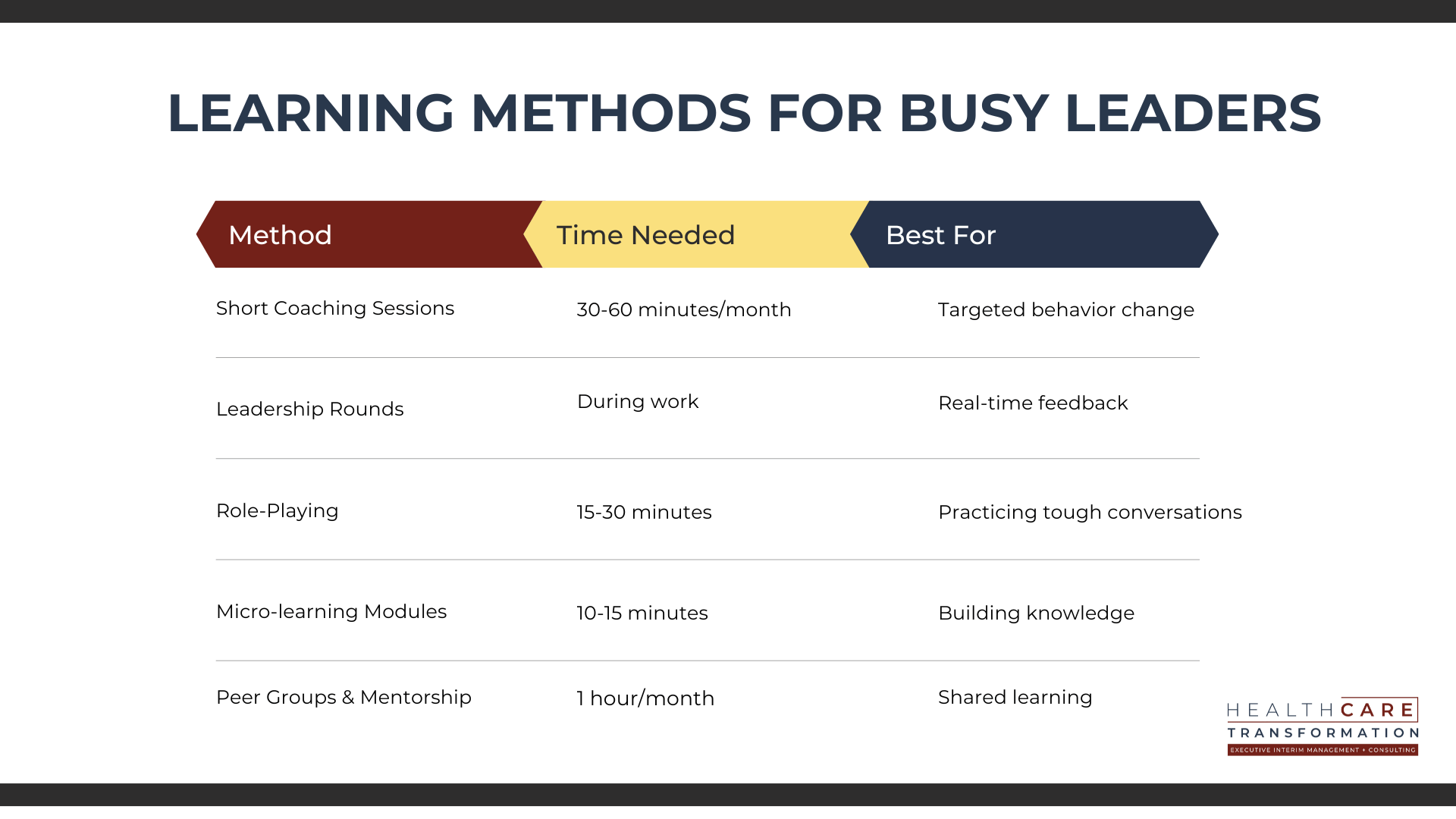
Soft skills are like muscles — they get stronger with practice. Even leaders set in their ways can learn new behaviors with effort. To improve soft skills, it is essential to seek feedback, engage in training and mentorship, and consistently practice key abilities such as active listening and empathy.
Start by assessing yourself using feedback from those you trust. Many leaders are surprised to find gaps between how they see themselves and how others see them.
Building Soft Skills Across Your Healthcare Team
While leaders set the tone for soft skills in the workplace, lasting change happens when these behaviors are reinforced across the entire organization. Creating an environment where communication, empathy and collaboration are expected — not optional — requires embedding soft skills into hiring practices, daily routines and organizational culture.
Hiring and Promotion
Soft skills should be evaluated as intentionally as clinical and technical qualifications. Healthcare organizations can strengthen team culture by identifying the specific interpersonal and leadership skills required for each role and assessing candidates accordingly.
Practical approaches include:
Asking behavioral interview questions focused on conflict resolution, teamwork and communication
Checking references for evidence of interpersonal effectiveness and professionalism
Including collaboration and emotional intelligence as criteria for promotion decisions
Encouraging candidates to highlight relevant soft skills in resumes and applications
Reinforcing Soft Skills Through Daily Operations and Culture
Soft skills take hold when they are consistently reinforced in everyday work. Rather than relying only on formal training, healthcare organizations can integrate expectations for communication and teamwork into existing routines and cultural practices.
Effective strategies include:
Creating space for concerns and recognition during daily huddles
Addressing teamwork and communication challenges in quality and safety meetings
Using interdisciplinary training to strengthen collaboration across departments
Sharing and celebrating examples of empathy and teamwork
Including soft skills in job descriptions and performance evaluations
In healthcare environments, technical expertise alone is not enough. Trust and collaboration directly influence patient outcomes. When soft skills are treated as core performance expectations, organizations build stronger teams, safer workplaces and more resilient cultures.
Measuring the Impact of Soft Skills in Healthcare Leadership
Soft skills are difficult to measure directly, but their impact appears consistently in workforce and patient data. Examples include:
Metric: Staff engagement scores
What it shows: Leaders who communicate clearly, demonstrate empathy and build strong relationships create teams that feel valued and engaged. Higher engagement scores often reflect trust, psychological safety and effective leadership — not just job satisfaction.Metric: Employee turnover rates
What it shows: Retention is closely tied to how supported employees feel. Leaders who address concerns early and model respect tend to retain staff longer, even in high-stress environments.
Metric: Incident and safety reports
What it shows: A healthy safety culture depends on employees feeling validated to speak up. Higher reporting rates often indicate trust, transparency and leaders who respond constructively rather than punitively.
While soft skills may not be captured by a single metric, they are far from invisible. By examining trends in workforce and safety data, healthcare leaders can identify how communication, empathy and problem-solving translate into real operational outc
FAQ: Soft Skills in Healthcare Leadershipomes.
-
Start small. Use existing meetings to practice listening and communication. Add one reflection question per shift. These small steps add up without extra hours.
-
Gather facts and examples. Get support from leadership and HR. Focus on behaviors and their impact, not character. Set clear improvement goals and follow up. Document everything.
-
Use clear behavior-based criteria. Combine self, peer and patient feedback. Train evaluators on bias. Look for patterns and address unfairness.
-
Clear, honest two-way communication. Keep staff informed, invite concerns and follow up. This builds trust and helps other soft skills work.
-
Absolutely. Highlighting soft skills, especially people skills such as communication, empathy and teamwork, is essential. Employers value these abilities because they directly influence workplace interactions and team success.
Conclusion: Soft Skills Are the Real Leadership Advantage in Healthcare
Healthcare leadership is demanding by nature. Regulations shift, staffing is tight and patient needs are complex. In the middle of all that, soft skills are what hold organizations together.
Communication, empathy, adaptability and emotional intelligence aren’t “nice-to-haves.” They are the skills that determine whether teams feel safe speaking up, whether staff stay or burn out and whether patients experience care as competent and compassionate. Time and again — during crises like COVID-19 and in everyday operations — leaders with strong soft skills outperform those who rely solely on technical expertise.
If you’re hiring, developing or evaluating healthcare leaders and want to prioritize soft skills alongside clinical and operational expertise, we can help.
At HCT, we partner with healthcare organizations to identify, assess and place interim leaders with decades of experience leading with empathy and building resilient teams. Book a consultation to discuss interim executive recruitment strategies built for today’s healthcare environment.
